

Trailer Leaf spring





Cangzhou Saixin Trading Co.,Ltd.
The factory was established in 1997 and has a development history of more than 25 years. At present, a comprehensive enterprise integrating production, R&D and sales has been formed. We can produce the goods that customers need according to their different requirements, and will provide customers with more competitive prices while ensuring quality. At present, our company's products are sold well in more than 20 countries in Africa, Asia, and South America, and are deeply loved by customers and friends.
Why Choose Us
Experience
The factory was established in 1997 and has a development history of more than 27 years.
Production
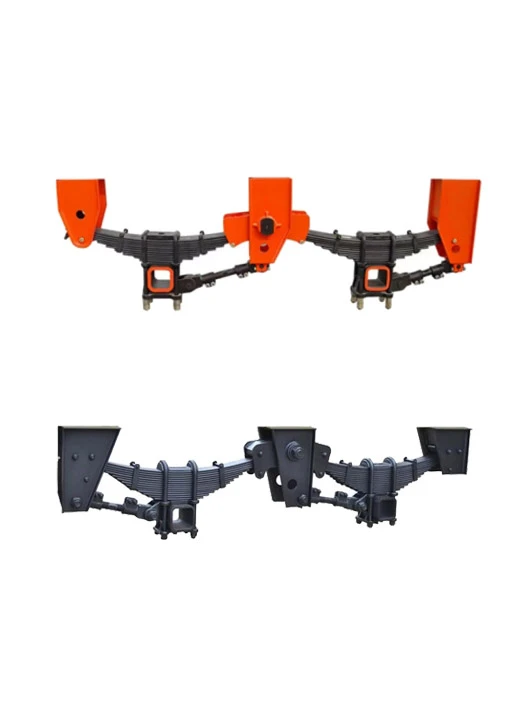
Semi trailer suspension, leaf spring, semi trailer, brake drum, wheel hub, fifth wheel, landing gear, brake shoes, brake chamber, air filter.,etc.
Technology
We can produce the goods that customers need according to their different requirements, and will provide customers with more competitive prices while ensuring quality.
R&D Team
At present, a comprehensive enterprise integrating production, R&D and sales has been formed.
What Does A Leaf Spring Series do?
The overall purpose of a leaf spring is to provide support for a vehicle. It also creates a smoother ride, absorbing any bumps or potholes in the road. Additionally, leaf springs are used to locate the axle, control the height at which the vehicle rides and keep the tires aligned on the road.
Because of their benefits, leaf springs are in high demand. Casual transportation is just one way leaf springs have contributed to our transportation industry. These days, leaf springs are more popular with heavy commercial vehicles like trucks, SUVs and vans.
Farming
You could say the idea of using leaf springs to support farm equipment inspired their invention. As mentioned above, leaf springs were widespread in medieval times, back when agriculture was the major industry leader. Improvements like the leaf spring made it easier and faster for farmers to haul and transport goods for trade. Although the leaf spring's design has improved over the years, the same concept is still used in today's farming.
With today's high-tech, expensive farm equipment, leaf springs are more important than ever before. They absorb the load's weight, which removes the burden from the axle and extends the agricultural equipment's life span.
Industrial Equipment
Without leaf springs, construction vehicles would not be able to tote heavy loads. Leaf springs allow construction vehicles to carry heavy items like brick, stone, concrete and other massive materials. A vehicle's size is largely unimportant. Unless it's designed to support overbearing loads, it will not carry out its duty, resulting in breakdowns and unnecessary costs.
In addition to transporting construction items, leaf springs are also beneficial for operating machinery in areas that tend to receive high amounts of snow. High volumes of snow can get heavy once they freeze. Equipping your truck with heavy-duty leaf springs will alleviate any unnecessary stress, making it last through the winter.
Trucking
Trucks need leaf springs for hauling trailers and other equipment. Leaf springs keep the load stable and the cargo grounded. Without them, the trailer would sway and bounce, lifting off the pavement after minor bumps. This issue is why leaf springs are so critical for trucking — they promote safety on the road and protect cargo from damage. If a truck is carrying fragile or dangerous goods, these vehicle elements become especially important.

Leaf springs function as load-bearing and shock-absorbing components in various applications, primarily vehicle suspension systems. They consist of multiple metal plates or leaves stacked on top of each other, with a central bolt holding them in place. When a load is applied, such as the weight of a vehicle or cargo, the leaf spring distributes the load along its length, preventing excessive stress on any single point. As the vehicle encounters bumps or uneven terrain, the leaves flex, absorbing shocks and providing suspension travel for a smoother ride. Their inherent springiness allows leaf springs to rebound and maintain vehicle stability. They excel at supporting heavy loads while ensuring structural integrity, making them a popular choice for trucks, trailers, and other applications in which load-carrying capacity and durability are essential.
The manufacturing of leaf springs involves a series of precise steps. Typically crafted from hardened steel, known for its strength, leaf springs can either be pre-hardened before formation or hardened after. The process begins with bar shearing, in which flat bars of steel are cut into the desired leaf shape. These leaves are then punched together to create a stack, and machines trim the bars to the correct dimensions, tapering the ends as needed. The crucial heat treatment follows, subjecting the assembled leaf springs to high temperatures to harden the steel, enhancing their load-bearing capacity and resistance to fatigue. Surface finishes, such as painting, may be applied for visual appeal and corrosion protection. Quality control measures are implemented throughout the process to ensure the springs meet specific standards and tolerances. This meticulous manufacturing process ensures the durability and performance of leaf springs, which play a vital role in vehicle suspension systems and other applications.
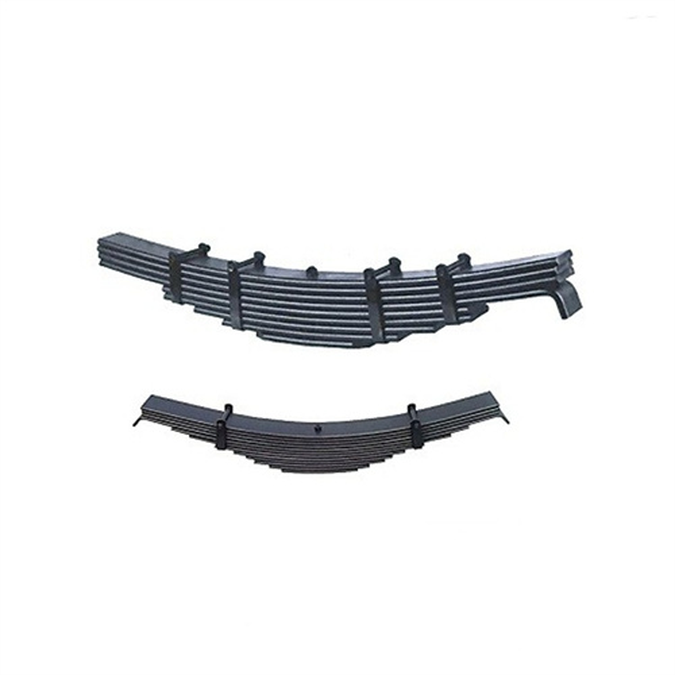
Leaf Spring Series Components
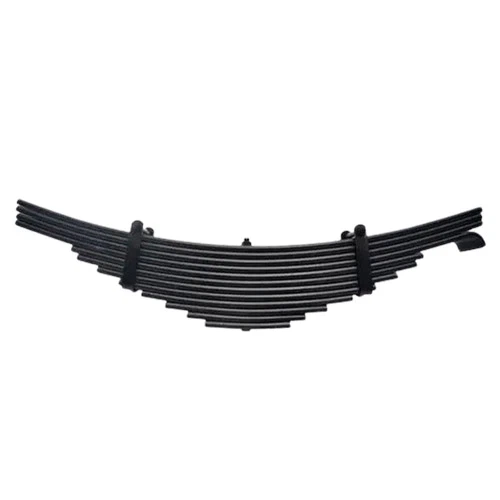
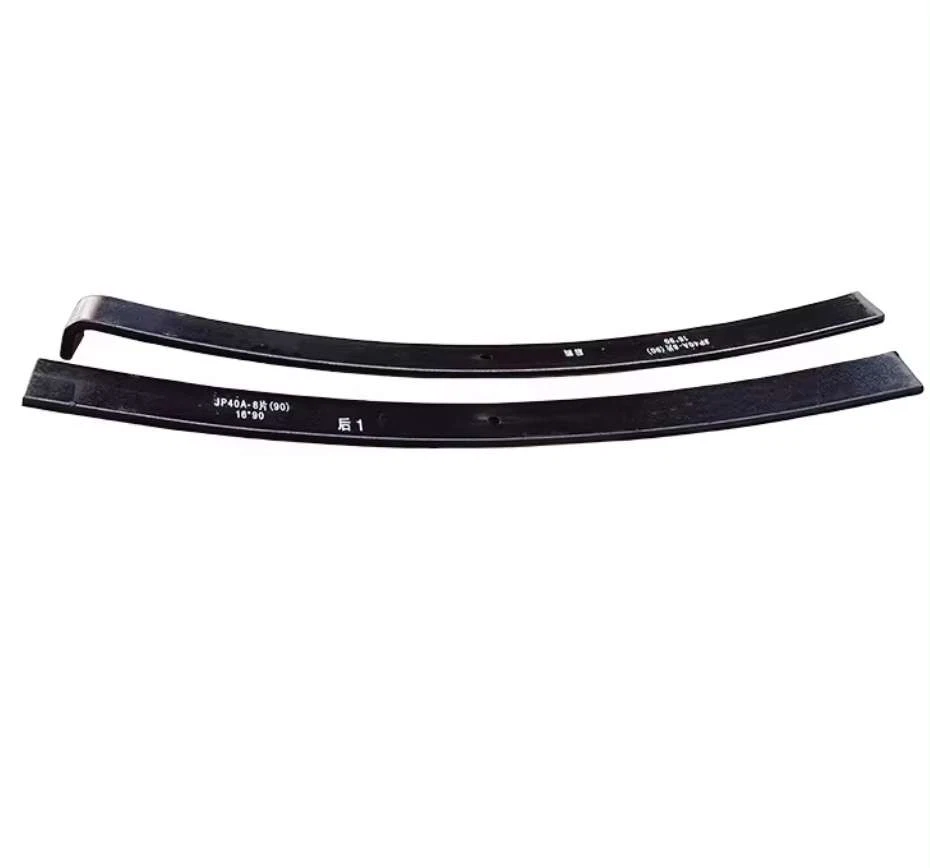
Metal Plates or Leaves: A leaf spring comprises several metal plates or leaves, often referred to as leaflets. These leaves are stacked on top of each other in ascending order of size, creating a layered structure with the central leaf, or main leaf at the top. The curvature given to these leaves, known as camber, imparts the leaf spring its characteristic semi-elliptic shape.
Master Leaf: At the top of the leaf spring assembly is the master leaf. This leaf is the longest and serves as the primary structural element. It is curved on both ends in order to form what is known as the spring eye. Through these eyes, two bolts are inserted to secure the leaf spring to the vehicle's body.
Center Bolt: The center bolt is a critical component located in the center of each leaf within the assembly. It plays a pivotal role in maintaining the structural integrity of the leaf spring. The center bolt consists of a U-bolt and a central bolt, ensuring that all the leaves remain securely held together and do not separate.
U-bolt: The U-bolt primarily provides the force required to firmly fasten the leaf spring and its associated components to the vehicle. These associated components include: the top plate, axle seat, and bottom plate, forming a robust connection.
Spring Eye: Often overlooked, the spring eyes are the loops located at the ends of a leaf spring. They play a crucial role in connecting the leaf spring to the vehicle's chassis or axle. Shackles or bolts, typically with bushings pressed into them, are used to secure the spring eyes to the vehicle.
Shackle: A leaf spring can be attached directly to the vehicle's frame at both ends or, more commonly, one end (usually the front) is attached via a shackle. The shackle allows for movement and compression, enhancing the leaf spring's springiness and contributing to a smoother ride.
Rubber Bush: Leaf spring bushings are positioned at the front eyes of the springs and may be composed of steel or entirely of rubber. These bushings act as cushions for the leaf springs, with front bushings typically encased in steel for added durability, while rear ones are made entirely of rubber to provide flexibility and absorb vibrations.
V-Rebound Clip: Rebound clips are employed to keep the individual leaves aligned and to prevent lateral shifting during vehicle movement. These steel bands are positioned on either side of the central bolt and provide stability, especially when the leaf spring contacts the axle at its center.

Leaf springs and coil springs are both suspension systems with different constructions and applications. Leaf springs are composed of multiple curved metal plates or leaves, stacked and secured by a central bolt. They are commonly used in heavy-duty vehicles like trucks and trailers, thanks to their load-bearing capacity and durability. In contrast, coil springs are single continuous coils of spring steel wire, taking on a compact, spiral shape. They are frequently employed in passenger cars and modern vehicles, providing a smoother ride and precise handling. Coil springs often work in conjunction with other suspension components, enhancing ride quality in lighter vehicles. The choice between leaf springs and coil springs comes down to factors such as: vehicle type, load-carrying requirements, and desired ride comfort.
Types of Leaf Spring Series
Multi-Leaf Spring: Multi-leaf springs are a common and versatile type of leaf spring. They consist of multiple metal plates or leaves stacked on top of each other, usually in a semi-elliptical shape. The longest leaf is positioned on top, and a center bolt is used to secure the plates together. Multi-leaf springs provide excellent support, stability, and load-carrying capacity, making them suitable for heavy-duty vehicles like trucks and railway wagons.
Mono Leaf Spring: Mono leaf springs are simpler in design, consisting of a single main plate without supporting leaves. This main leaf, which is thicker in the center and tapers towards the edges, acts as a master leaf. Mono-leaf springs are often used in light vehicles and can be a replacement for traditional multi-leaf springs.
Elliptic: Full elliptical leaf springs are created by joining two semi-elliptical leaf springs in opposite directions to form an oval shape. They are attached to both the axle and the vehicle frame. Unlike some other leaf springs, full elliptical springs do not require spring shackles. However, they are primarily found in older vehicle models and are less common due to challenges in maintaining correct axle alignment.
Semi-Elliptic: Semi-elliptical leaf springs are the most common type of leaf spring suspension system. They have a bow-like appearance, comprising several leaves of varying lengths but the same width. The upper leaf, known as the master leaf, is attached to the vehicle's frame, while the other end is fixed to a shackle. This design effectively absorbs vibrations from uneven road surfaces, providing a comfortable ride. Semi-elliptical leaf springs are commonly used on both the front and rear axles of trucks and the rear axles of cars.
Three Quarter-Elliptic: A three-quarter elliptical leaf spring combines features of a semi-elliptical spring and a quarter-elliptical spring. One section is attached to the axle, while the other is connected to the vehicle's frame. This design provides additional support, making it popular in older vehicles.
Quarter-Elliptic: Quarter-elliptical leaf springs are a variation of traditional leaf springs, halved in structure. They are often found in older vehicles, with one end attached to the frame via bolts and the other connected to the front axle. These springs are sometimes referred to as cantilever-type leaf springs.
Transverse: Transverse leaf springs have a similar appearance to semi-elliptical leaf springs but are inverted, with the longest leaf at the bottom. These leaf springs are attached to each wheel (the left and right) instead of on top of them and are secured through U-bolts. Transverse leaf springs are often found in older vehicles with independent wheel suspensions.
What Are Leaf Spring Series Used For?
Leaf springs have a range of applications beyond just being a part of suspension systems for vehicles. Here are some common uses of leaf springs:

Suspension Systems for Vehicles
Leaf springs are perhaps best known for their use in suspension systems for various types of vehicles. They are employed to provide support, stability, and shock absorption, helping to ensure a smooth and controlled ride. Leaf springs are commonly found in trucks, buses, trailers, and some older car models, especially those designed for heavy-duty or off-road applications. These springs play a critical role in distributing the weight of the vehicle and its cargo evenly, contributing to safe and reliable operation.

Leaf springs
Leaf springs are also utilized in the construction of trampolines. The inherent flexibility and springiness of leaf springs make them ideal for this purpose. In trampolines, leaf springs are typically attached to the frame, forming the support structure for the bouncing surface. When a person jumps on a trampoline, the leaf springs flex and then return to their original position. They provide the bounce and rebound effect that makes trampolines enjoyable for recreation and exercise.

Leaf spring application
Leaf springs are sometimes incorporated into the design of automobile clutches. The clutch is a key component in a manual transmission system that engages and disengages the engine from the transmission. The leaf spring in the clutch is used to provide tension and help control the movement of the clutch disc, ensuring smooth and precise operation when the driver depresses the clutch pedal.
Leaf springs are sometimes incorporated into the design of automotive clutches. Clutches are critical components in manual transmission systems, responsible for engaging and disengaging the engine from the transmission. Leaf springs in clutches are used to provide tension and help control the movement of the clutch plate, ensuring smooth and precise operation when the driver depresses the clutch pedal.
What Are Leaf Springs Made Of?
Leaf springs are typically made of hardened steel. This steel is chosen for its strength, durability, and ability to withstand the stresses and loads that leaf springs are subjected to. The specific type of steel and its composition can vary depending on the manufacturer and the intended use of the leaf springs.
In some cases, leaf springs may undergo a heat treatment process to further harden the steel, improving its load-bearing capacity and resistance to fatigue. Heat treatment involves subjecting the springs to high temperatures and then cooling them rapidly to achieve the desired hardness and mechanical properties.
While steel is the most common material for leaf springs, other materials like composite materials or fiberglass-reinforced plastics may be used in some specialized applications, particularly for lightweight or high-performance vehicles. However, traditional leaf springs for most vehicles, especially heavy-duty and commercial vehicles, are primarily made of steel due to its proven strength and reliability.
Leaf springs and parabolic springs are two different suspension systems, each with unique characteristics and applications. Leaf springs are constructed from multiple curved metal plates or leaves stacked on top of each other and secured by a central bolt or U-bolt. This design provides exceptional load-bearing capacity and durability, making them a preferred choice for heavy-duty vehicles such as: trucks, buses, and trailers. Leaf springs offer stability but may result in a slightly harsher ride due to their rigid construction.
In contrast, parabolic springs have a more modern and tapered design. They consist of fewer leaves compared to traditional multi-leaf springs and are known for their progressive, tapered shape. Parabolic springs are flexible and have the ability to deliver a smoother ride. They find applications in a range of vehicles, including: some trucks, SUVs, and passenger cars, particularly in situations in which ride comfort and handling take precedence. Parabolic springs are designed to distribute loads progressively along their length.
A suspension system is a system of springs, shock absorbers and linkages. They connect a vehicle to its wheels and allow relative motion between them both. They are responsible for a vehicle's handling and braking for safety. There are a variety of independent suspension systems, though we are going to focus on the comparison of the two main suspension systems.
Leaf spring suspensions are simpler when it comes to the functionality as the axle is suspended by the spring and doesn't require arduous suspension geometry of the coil-spring set-up. Leaf springs are much sturdier in comparison to coil springs. They're capable of handling much highest loads with less deflection than coils, trucks with leaf springs are also easier to raise or lower.
Leaf springs' simply means each spring is attached at fixed points on the chassis, it leaves a miniscule area for adjustability and customisation of the suspension geometry. These springs also flex a great deal less than coil springs which means loss of wheel-to-ground contact under extreme conditions.
Advantages
Strong and simple construction, linking holds the axle in position without the need for separate linkage.
Leaf springs can support the weight of the chassis of a vehicle and so it is perfect for use on commercial vehicles.
They control axle damping- to damper means the main function of a shock. They are used to control spring oscillation by using hydraulic fluid.
Typically, they are simple in design and cheaper to produce
Our Factory
We can produce the goods that customers need according to their different requirements, and will provide customers with more competitive prices while ensuring quality. At present, our company's products are sold well in more than 20 countries in Africa, Asia, and South America, and are deeply loved by customers and friends.

FAQ
Q: What is the concept of leaf spring?
Q: What's better leaf spring or coil?
Q: What are the three basic types of leaf springs?
1.Elliptical Leaf Springs. Elliptical leaf springs come in quarter, semi, three-quarters and full shapes. ...
2.Transverse Leaf Spring. Transverse leaf springs have the same shape as semi-elliptical models. ...
3.Platform Leaf Spring.
Q: Why a laminated spring is made up of a series of leaves?
Q: What does 3 1 leaf spring mean?
Q: Are leaf springs expensive?
Q: How long do leaf springs last?
Q: Do modern trucks use leaf springs?
Q: Do leaf springs wear out?
Q: Why is it called a leaf spring?
Q: Why do trucks use leaf springs?
Q: What makes a leaf spring break?
Q: Are leaf springs only made of steel?
Q: What is better than leaf springs?
Q: Why do people flip leaf springs?
Q: How do I know what leaf springs I need?
Q: How do I know what size leaf spring I need?
Q: Are leaf springs hard to install?
Q: Are upgraded leaf springs worth it?
Q: Do you need shocks with leaf springs?
As one of the most professional leaf spring series manufacturers and suppliers in China, we're featured by quality products and competitive price. Please rest assured to wholesale customized leaf spring series made in China here from our factory.
American Type Brake Drum, Water Separator, Germany Type Brake Drum for BPW 12T