

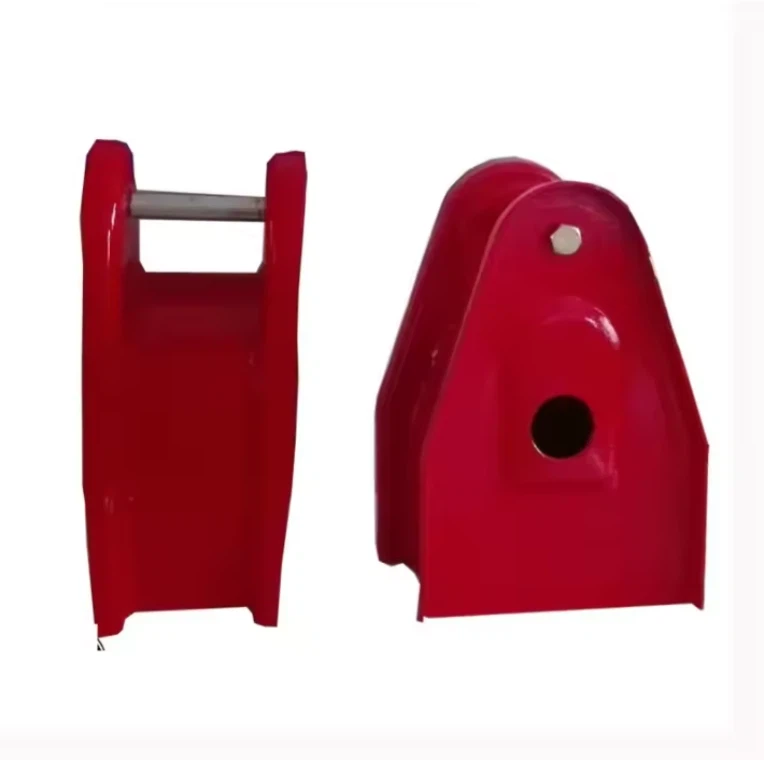
fuwa type trailer suspension



Cangzhou Saixin Trading Co.,Ltd.
The factory was established in 1997 and has a development history of more than 25 years. At present, a comprehensive enterprise integrating production, R&D and sales has been formed. We can produce the goods that customers need according to their different requirements, and will provide customers with more competitive prices while ensuring quality. At present, our company's products are sold well in more than 20 countries in Africa, Asia, and South America, and are deeply loved by customers and friends.
Why Choose Us
Experience
The factory was established in 1997 and has a development history of more than 27 years.
Production
Semi trailer suspension, leaf spring, semi trailer, brake drum, wheel hub, fifth wheel, landing gear, brake shoes, brake chamber, air filter.,etc.
Technology
We can produce the goods that customers need according to their different requirements, and will provide customers with more competitive prices while ensuring quality.
R&D Team
At present, a comprehensive enterprise integrating production, R&D and sales has been formed.
What Is A American Suspension?
The trick to gliding over road imperfections and contours lies in an important component of every vehicle, known as the suspension. This feature is made possible by means of springs attached beneath the vehicle that absorb most of the undulations of the road, without transferring them to the driver or passengers. These springs are part of a vehicle's suspension system, which not only ensures rider comfort, but also improves vehicle handling by bringing the “bounce” of these springs to rest in a suitable manner.

The displacement unit in a suspension is capable of compression and elongation, based on the direction of wheel travel. When a wheel travels over a positive undulation on the road, such as a speed breaker, the displacement unit compresses. Similarly, when the wheel travels over a negative undulation, such as a pothole, the displacement unit elongates.
The kinetic energy due to wheel travel is stored in the displacement unit. A shock absorber is composed of a piston moving in an oil-filled chamber. This piston moves in synchronization with the displacement unit. Due to the incompressible nature of liquids, the piston movement is very restrictive and regulated, thus allowing for a controlled dissipation of the kinetic energy.
Semi-trailer suspension is an important part connecting the traveling device and the frame of the semi-trailer. The supporting force, braking force, and driving force of the vehicle are all transmitted through the suspension system. And the suspension can also reduce the impact of harsh roads on the vehicle, play a shock absorption effect, and improve the ride comfort of the vehicle. There are many types of semi-trailer suspensions. The common semi-trailer suspensions include: leaf spring mechanical suspensions, air suspensions, and argo bogie suspensions. Their respective characteristics are introduced as follows:
1. Leaf spring mechanical suspension
The leaf spring mechanical suspension takes the leaf spring as the elastic element and also as the guide device. Its main components are: front hangers, middle hangers, equalizers, rear hangers, leaf springs, fixed torque arms, adjustable torque arms, axle clamping plates, lifting lugs, U-bolts, etc.
The main advantages of this suspension are low price, good reliability and convenient maintenance. At present, more than 80% of semi trailers in China use leaf spring mechanical suspensions.
1) American type leaf spring mechanical suspension
The American type mechanical suspension is widely used all over the world. Usually for this suspension, the capacity of the single axle is 11 tons, 13 tons, 16 tons and other tons. The suspension can be matched with Φ127mm round beam and 150x150mm square beam axles.
According to the position of the axle relative to the leaf spring, it can be divided into overslung suspension and underslung suspension. The suspension of the axle under the leaf spring is called overslung suspension, and the suspension of the axle above the leaf spring is called underslung suspension.
A. 68 series American type leaf spring suspension
Usually for this suspension, the capacity of the single axle is 11 tons, the optional number of the semi-trailer axles is 1 axle, 2 axles and 3 axles, and the optional conventional leaf springs are 75x13-9L and 75x13-10L, the parabolic leaf spring is 75x22-3L. The equalizer's shaft sleeves and torque's sleeves of the suspension are both tapered rubber sleeves.
B. 88 series American leaf spring suspension
Usually for this suspension, the capacity of the single axle is 13 tons, the optional number of the semi-trailer axles is 1 axle, 2 axles and 3 axles, and the optional conventional leaf springs are 90x16-7L and 90x13-10L.
2) German type leaf spring suspension
The German type leaf spring suspension is widely used in Europe and Africa, and can be matched with 150mm x 150mm square beam axles. The weight of product is heavier than the that of the American type suspension. This suspension is not suitable for the lightweight design requirements of Chinese semi-trailers. The wearing parts of the German type suspension are removable and replaceable while The wearing parts of the American type suspension are welded, which is relatively simple in maintenance, and it is convenient to replace the wearing parts. The common German type suspension has the following two series:
A. BPW series German leaf spring suspension
The single axle of the suspension are designed to carry 12 tons, 14 tons, 16 tons. The optional semi-trailer axles are 1 axle, 2 axles, 3 axles and 4 axles. The optional conventional leaf spring specifications are 100x12-12L, 100x12-14L and 100x14-12L, etc.
B. SAF series German leaf spring suspension
Usually for this suspension, the capacity of the single axle is 12 tons, 14 tons, 16 tons, the optional number of the semi-trailer axles is 1 axle, 2 axles, 3 axles and 4 axles, and the optional conventional leaf springs are 100x12-12L, 100x12-14L and 100x14-12L, etc.
3) Casting type leaf spring suspension
Casting type suspension is widely used in Southeast Asian and Australian markets (such as the Philippines, Bangladesh, India, Cambodia and other countries and regions) and some European markets. The suspension can be match with Dia. 127mm round beam axles and 150mm x 150mm square beam axles. The common casting suspension has the following three series:
A. YTE series casting leaf spring suspension
Usually for this suspension, the capacity of the single axle is 12 tons, the optional number of the semi-trailer axles is 1 axle, 2 axles and 3 axles, and the optional conventional leaf spring is 75x13-08L.
B. European series casting leaf spring suspension
Usually for this suspension, the capacity of the single axle is 13 tons, the optional number of the semi-trailer axles is 1 axle, 2 axles and 3 axles, and the optional conventional leaf spring is 75x13x10L.
The suspension, unlike other powertrain components like the combustion engine and transmission, will not become antiquated with the advent of electric vehicles, as stability and comfort of the ride will always be an important aspect of automotive travel. Paying close attention to suspension parameters and upkeep can go a long way towards improving the overall health and performance of your vehicle!

Every vocational truck suspension option comes with its own unique performance trade-offs. The best choice requires an understanding of how the trade-offs match up to your application requirements.
The job of the suspension is to support and cushion the load. The suspension absorbs shock loads that would otherwise be transferred into the frame. If the truck frame is doing the job of the suspension by twisting and absorbing shock, then it stresses every component of the vehicle, eventually causing failures and maintenance issues.
Understanding the application and performance demands is the first step. The capacity of the suspension; whether it is for a single, tandem or tridem configuration; if the system is for a tractor or straight truck; and the nature of the terrain all play a role in narrowing the choice between air, rubber or steel springs.
There are multiple suspension options available to meet the many niches in the vocational truck market, each with unique features and benefits. Compare the suspension choices available to meet application needs — reducing weight, improving off-road mobility, increasing stability, minimizing torque reactivity or all of the above — while balancing upfront cost.
The type of loading and unloading performed must be considered. A dump truck hauling aggregate requires a different suspension than a mixer truck, for instance. There is more of a shock load factor when aggregate is loaded vs. ready-mix. Additionally, a stationary load has different needs than a moving load, such as liquid bulk haul or a concrete mixer.
Be sure to account for worst-case scenarios. Sometimes the truck may be required to take on heavier loads than it usually does. These temporary loads may require a higher creep rating on the jobsite, thus requiring a heavier-duty suspension. Where the truck will operate — the type of terrain — can create different needs for articulation and ground clearance.
Serviceability gains importance in remote locations. For example, if it is going to be in the middle of an oil field with no immediate access to a dealership, it's important to spec the suspension to be serviceable by the driver.
Narrowing the Gaps
Avoid relying on past history to spec today's suspensions. Suspension designs have become more streamlined and versatile over time, reducing trade-offs.
In the past bigger, bulkier and heavier suspensions suited for tougher applications also provided a rougher ride. With the introduction of air ride suspensions as well as other innovations, drivers now have a more comfortable ride, and the loads are better protected from rough terrain.
There used to be a large gap between the comfort of on-road suspensions and the durability and stability of their off-road counterparts. The gap has closed significantly in recent years, with off-road suspensions getting very close to matching the comfort and performance of on-road suspensions.
Consider Maintenance
The suspension choice helps drive ownership cost. An improperly specified suspension can result in costly repairs down the road, wearing out components faster and increasing overall maintenance costs and downtime vs. a properly specified product.
Balance maintenance requirements and expected performance. Different suspensions have different requirements for maintenance, such as frequency and type of lubrication and replacing bushings. The application and operating environments may also affect maintenance requirements.
The complexity of the suspension helps determine maintenance costs. Generally speaking, steel suspensions are the least expensive to maintain, while air ride suspensions are more complex and therefore more likely to require maintenance. This is because air ride suspensions have air in the system that needs to be regulated with control valves. Also, depending upon the type of environment or application, air springs can get cut or cracked if stones get embedded.
High Articulation Solutions
Mechanical suspensions typically offer greater articulation than air suspensions. They can also be designed to maximize stability. A trade-off between articulation and stability is not necessary.
Walking beam suspensions have traditionally been favored for high articulation applications. Floating walking beam suspensions allow maximum articulation and can offer maximum roll stability. The floating beam suspension with soft ride restrictor can provide a superior ride quality that compares favorably with air ride when on the road. This feature is available for specific truck applications and tractors, as well.
Walking beam suspension systems are also extremely durable. Depending upon the spring medium design, walking beam suspensions can have a little bit harsher ride and may require more maintenance, because they have a more complex design than spring steel suspension systems.
Air Suspensions Provide Best Ride Quality
It's hard to beat air ride for driver comfort. Creature comfort and the reduction of shock to other components of the chassis are real reasons to look at air ride. That said, it does have limitations. No manufacturer has been able to offer both stability and articulation with air ride.
Air ride suspensions continue to expand in certain vocational applications, such as dump trucks and heavy-haul tractors. Air ride suspensions provide consistent ride quality in any load condition, which will help lessen driver fatigue while protecting equipment and chassis components from damaging vibration and road inputs.
What Are The Various Types Of Suspension?

Passive Suspension
I. Coil Springs
The displacement unit is a coil spring made of steel. These are a very cost-effective option and are found on most modern cars and motorcycles.
Ii. Leaf Springs
The displacement unit is a stack of elastic sheets of metal laid out laterally or longitudinally. While they were extensively used in old cars, as well as trucks and heavy load-bearing vehicles, they are now considered antiquated and rarely seen.
Active Suspension:
I. Air Springs
In this type of suspension setup, the displacement unit is an air-filled rubber bladder that can be inflated or deflated at will. This is generally accompanied by a compressor unit and a filter to prevent moisture from entering the system. Air suspension is better than mechanical suspensions in terms of ride quality, load-bearing and ride handling. However, these systems are more expensive to install and maintain.
Ii. Hydropneumatic Suspension
A hydropneumatic suspension is a combination of air springs and hydraulic damping integrated into one unit. Apart from damping, the hydraulic column also serves to vary the ground clearance by adjusting the ride height.

A suspension system in a vehicle serves to isolate the occupants of a vehicle from the vibrations that arise due to traversing the contours of the road surface, while helping the driver remain in complete control.
In order to have maximum control of a vehicle, it is imperative to be in maximum contact with the traversed surface, which appears to be in contrast with the original purpose of suspension—isolation from the road surface. Thus, suspension systems are designed to achieve a trade-off between occupant comfort and ride handling.
Another frequently overlooked function of suspension systems is the absorption of shock loads to prevent any damage to the chassis to which they are connected.
Sprung And Unsprung Mass
The part of the vehicle supported by the suspension system is known as the sprung mass. This usually includes various components, such as the driveline components, like the engine and transmission, vehicle body and chassis frame, as well as the passengers and their cargo.
The unsprung mass consists of the parts that are not supported by the suspension. These include the wheels, brake assemblies, differentials, drive axles etc.
In order to maximize control of a vehicle, a high sprung to unsprung mass ratio is desirable. A higher sprung mass ensures more force on the springs and wheels—and consequently, greater traction. However, there is only a certain extent to which the sprung mass of a vehicle can be increased without affecting handling and the adequacy of power produced by the engine. Thus, the sprung to unsprung mass ratio is a trade-off between traction and weight.

An adaptive suspension system consists of an active suspension system linked to cameras, sensors and the GPS system built into a vehicle. This enables the onboard computer to make adjustments to the suspension configuration in anticipation of the terrain to come, thereby ensuring smoother ride quality and better handling.
Ride height control is another feature found in hydropneumatic suspension systems. By changing the amount of oil in the hydraulic column, the height of the vehicle can be varied slightly. A lowered car is more stable and easier to handle, while a high-positioned car can effectively clear underbody obstacles, such as high speed breakers, surface undulations, or even water from flooding.
Components Of A Suspension System
To allow for relative motion between the wheels and the frame, the suspension is connected to the chassis and the wheels by means of links. These links have various degrees of freedom, which define the axis along which the suspension moves.
The displacement units are the core of any suspension system—the kinetic energy due to relative motion between the wheels and the remaining body when traveling over uneven surfaces gets stored in these displacement units.
While springs are a popular displacement unit, modern cars see hydraulic and pneumatic alternatives that can be electronically controlled. A displacement unit stores energy during travel over uneven surfaces and releases that energy when the wheels return to normal surfaces. The energy is released in a pattern known as damped simple harmonic motion.
While a damped harmonic motion of the displacement unit can bring the vehicle to rest on its own, the time taken is usually longer, and the energy dissipation can be unregulated, leading to uncomfortable rides and a loss of suitable contact with the road. To eliminate this, it's important to dissipate the stored energy in the displacement unit quickly and in a more regulated fashion. This is achieved by means of dampers.
A damper is composed of a piston head with holes in it traveling through an oil-filled cylinder. The incompressible nature of oil causes the piston to move slowly and uniformly through the cylinder, while 'settling' the motion of the displacement unit faster.
Why is Your Car'S Suspension So Important?
Your car's suspension system is responsible for smoothing out the ride and keeping the car in control. Specifically, the suspension system maximizes the friction between the tires and the road to provide steering stability and good handling. The suspension system also provides comfort for passengers to limiting the impact of particular road conditions to not only the car, but the passengers riding inside.
The suspension system is made up of several components, including the chassis, which holds the cab of the car. The springs support the vehicle weight and absorb and reduce excess energy from road shocks, along with the shock absorbers and struts. Finally, the anti-sway bar shifts the movement of the wheels and stabilizes the car.
Your car's suspension system must be in good condition. Worn suspension components may reduce the stability of the vehicle and reduce driver control, as well as accelerate wear on other suspension system components. Replacing worn or inadequate shocks and struts will help maintain good ride control, as they:
Control spring and suspension movement
Provide consistent handling and braking
Prevent premature tire wear
Help keep the tires in contact with the road
Maintain dynamic wheel alignment
Control vehicle bounce, roll, sway, drive, and acceleration squat
Reduce wear on other vehicle systems
Our Factory
We can produce the goods that customers need according to their different requirements, and will provide customers with more competitive prices while ensuring quality. At present, our company's products are sold well in more than 20 countries in Africa, Asia, and South America, and are deeply loved by customers and friends.

FAQ
Q: What are the applications of suspension system?
Q: What is a mechanical suspension system?
Q: What is the difference between mechanical and air suspension?
Q: What are the 3 main purposes of the suspension system?
Q: What are the three most commonly used suspension systems?
2.Dependent Suspension. Dependent suspension, sometimes called solid axle or live axle suspension, is a simpler suspension system. ...
3.Semi-Independent Suspension.
Q: Is car suspension mechanical?
Q: What is a mechanical absorber?
Q: What are the two most popular suspension systems?
Q: What happens if your car suspension is bad?
Q: Is it better to have trailer hitch high or low?
Q: How often should you grease a trailer suspension?
Q: Do all trailers have air ride suspension?
Q: How do you load a trailer to avoid sway?
Q: How do you know when trailer axle is bad?
If the vibrations become severe enough and lead to an uncomfortable ride, making the vehicle and trailer difficult to hail or control, this is a sure sign that your axle is damaged and it's time for a repair.
Q: How long is a trailer good for?
One of the most common — and most important — questions we hear is, "How long does a trailer last?” That entirely depends on the quality of the trailer, the type of trailer, and how well you maintain it. However, we will say that an average high-quality enclosed trailer will last between 10 and 15 years.
Q: What happens when suspension wears out?
Q: Why does my trailer sway so much?
Q: What is the best suspension upgrade for towing?
Q: Does suspension upgrade increase towing capacity?
Q: How much does it cost to get better suspension?
As one of the most professional american suspension manufacturers and suppliers in China, we're featured by quality products and competitive price. Please rest assured to wholesale customized american suspension made in China here from our factory.
90mm Kingpin, Germany Type Wheel Hub for BPW 12T, 50mm King Pin