

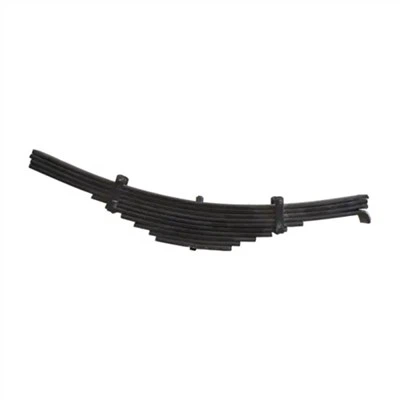
Trailer fuwa type leaf spring




Cangzhou Saixin Trading Co.,Ltd.
The factory was established in 1997 and has a development history of more than 25 years. At present, a comprehensive enterprise integrating production, R&D and sales has been formed. We can produce the goods that customers need according to their different requirements, and will provide customers with more competitive prices while ensuring quality. At present, our company's products are sold well in more than 20 countries in Africa, Asia, and South America, and are deeply loved by customers and friends.
Why Choose Us
Experience
The factory was established in 1997 and has a development history of more than 27 years.
Production
Semi trailer suspension, leaf spring, semi trailer, brake drum, wheel hub, fifth wheel, landing gear, brake shoes, brake chamber, air filter.,etc.
Technology
We can produce the goods that customers need according to their different requirements, and will provide customers with more competitive prices while ensuring quality.
R&D Team
At present, a comprehensive enterprise integrating production, R&D and sales has been formed.

The American type mechanical suspension is widely used all over the world. Usually for this suspension, the capacity of the single axle is 11 tons, 13 tons, 16 tons and other tons. The suspension can be matched with Φ127mm round beam and 150x150mm square beam axles.
Due to the sheer amount of metal layered together, leaf springs offer a large amount of support between the wheels, axles and the car's chassis. They can take huge vertical loads being applied to them due to their tight-knit structure, hence why heavy duty industries still use them. Vertical loading is also distributed throughout the length of the leaf spring rather than acutely through a small spring and damper, which can potentially create a concentrated force too large for the suspension to handle.
In a car, damping can be an extremely important characteristic. If the suspension is under-damped, the car will wallow and bounce around well after hitting any bump or pot hole in the road. This was a significant characteristic in cars that used helical springs before the dawn of the shock absorber and was disadvantageous to cars when driven at any real pace. Leaf springs coped much better with vehicle damping due to the friction between each plate of steel which made the response time after a vertical flex in the suspension much quicker, thus making for a much more controllable car.
Leaf springs were simple in design and cheap to produce in comparison with the early springs and dampers therefore it was the go-to setup once cars were being fully mass produced to ensure reliability while keeping costs low. Monoleaf springs were the simplest design of the lot, using only one leaf of spring steel which tapered from thick in the middle to thin at the edges (known as parabolic leaf springs) to distribute the vertical loads appropriately. A single leaf setup could only however be used on extremely lightweight vehicles due to the lack of strength within the bar.
In a vehicle's suspension system, leaf springs are essential. They're layers of curved metal strips under the vehicle. Their main job is to support and distribute the weight of the vehicle. The shape and layout of metal strips vary by model and purpose. During travel, leaf springs have two important jobs. They hold up the car and make sure it doesn't bounce too much, keeping the driver and passengers comfy. Also, they're like a safety guard for the car's suspension system, making driving safer. To maintain vehicle suspension and performance, inspect and maintain leaf springs are crucial. If necessary, replace them to ensure a consistent driving experience. Leaf springs provide a smooth ride on city streets or rough terrain.

Types Of Leaf Springs
For trucks, the extra weight of the vehicle and the load it carries require additional support from the suspension system. Leaf springs are one of many types of springs found in truck suspension systems. With a variety of shapes, leaf numbers and capacities, these springs offer multiple options for different truck sizes. Whether you have a light-duty pickup or a heavy-duty model, leaf springs will provide the support your truck needs for towing, hauling and daily commuting.
Leaf Spring Shapes
The various shapes of leaf springs correspond to the type of load they can support. You know your truck has adequate support when its wheels stay on the ground going over bumps and the bed doesn't sag when full or during towing. Depending on how you use your truck, you may need OEM or heavy-duty leaf springs.
The shapes of the springs also make a difference. Not all leaf spring shapes apply to truck suspension systems. Common shapes you may encounter include elliptical, transverse and platform leaf springs.
1. Elliptical Leaf Springs
Elliptical leaf springs come in quarter, semi, three-quarters and full shapes. For trucks, the most commonly used are semi-elliptical springs. These springs have a parabolic shape and appear on both rear and front axles of trucks, and rear axles only on cars.
Older models of small cars used the less efficient quarter-elliptical leaf springs. These looked like half a semi-elliptical spring. By combining this type of elliptical spring with a semi-elliptical, manufacturers made three-quarters springs. However, like quarter springs, these fell out of favor and only appear on older cars today.
Some manufacturers thought that if semi-elliptical leaf springs worked well, putting two of them facing each other into a full elliptical spring would be better. This design option failed, though, because the pressure from the spring adversely affected alignment.
2. Transverse Leaf Spring
Transverse leaf springs have the same shape as semi-elliptical models. However, these springs fit under a truck with the base of the curve toward the chassis, rather than facing the ground. In addition to their change in orientation, these leaf springs also have a different location from their semi-elliptical counterparts. This upside-down installation goes along the sides of the vehicle instead of on the front or rear axles. Today, it's rare to see transverse leaf springs on trucks or other vehicles.
3. Platform Leaf Spring
Platform leaf springs use a pair of semi-elliptical leaf springs — one facing down, and the other pointing up. When affixed to the vehicle, the springs support three points of the vehicle's weight along each side.
Multi vs. Mono
Another consideration for how to choose leaf springs aside from the shape is the number of leaves they have. Two leaf spring suspension types exist – mono and multi.
Mono leaf springs only have a single piece of metal. Often, these mono-leaf springs will have a thicker center that narrows in depth toward the edges to provide some similar support to multi-leaf springs that have more springs in the center and fewer along the edges.
While mono-leaf springs suffice for lightweight vehicles, if you have a truck or do any towing, you likely need the additional support of more leaves. Multi-leaf springs have several pieces of metal that increase in size from the bottom to the top.
Multi-leaf springs need spring clips between the layers. These specialty clips permit each leaf to move as needed while staying in alignment with other leaves. A center bolt passes through the thickest portion of the multi-leaf spring, holding all layers together. To prevent the spring from squeaking and wearing out over time, each layer has a friction-reducing insulator between it and the leaves above and below it.
Leaf Spring Capacity
Just as the different types of leaf spring shapes exist, so do various capacities related to the number of leaves and leaf spring sizes. Look at the specs for the capacity of the leaf spring.
Another essential aspect of how to choose leaf springs is to know the capacity you need. Regularly exceeding this carrying ability can cause excessive wear and premature failure of your leaf springs.
Look at your truck's owner's manual to determine the stock carrying capacity. If this amount is too low for your typical hauling weights, you should upgrade the rear leaf springs to provide more support in the back of your truck. Find springs that offer a higher weight capacity than your vehicle currently uses. To choose the right springs, you may need to upgrade to heavy-duty leaf springs from the stock springs on your truck.
Number of Leaves
The number of leaves on multi-leaf springs allows for better support. When comparing mono to multi-leaf springs, the latter offers a higher carrying capacity because the added leaves increase the stiffness of the spring.
The device must have at least two springs to qualify as a multi-leaf spring. Most leaf springs will have between three and five leaves. However, for some heavy-duty applications, the leaf springs will have even more layers.
Choosing leaf springs with too many leaves can create too much stiffness in the suspension. This situation makes the ride stiff and less controlled. However, if you don't have enough leaves in the spring, you will lose carrying capacity from a lack of suspension.
While the number of leaves on your multi-leaf springs is a critical factor, you should focus more on matching the springs' load capacity to what you typically carry in your truck. When you choose suspension parts that match the way you use your vehicle, you will improve your performance and not have premature spring failure from carrying too much.
Common Sings Your Leaf Springs Need To Be Replaced
Leaf springs are vital for your suspension. Their state impacts safety and comfort. With time, they may wear out. Recognize signs for replacement. Let's explore some common signs that suggest it's time to replace your leaf springs.
Uneven Ride Quality
One of the most noticeable signs is an uneven and bumpy ride. Excessive bouncing, vibrations, or discomfort while driving may signal worn-out leaf springs. The springs' ability to absorb shocks diminishes over time, leading to a rougher ride.
01
Sagging Rear End
A lower rear end of the vehicle is a clear sign of leaf spring problems. This can worsen control, especially during emergencies or heavy loads.
02
Noise and Squeaks
Strange noises over bumps or turns may state damaged leaf springs. These noises are often a sign that the springs are not functioning and need attention.
03
Visible Damage
Visual inspection can reveal cracks, fractures, or deformation in the leaf springs. Any visible damage is a clear sign that they should be replaced . Ignoring visible damage can lead to further deterioration and potential safety risks.
04
Tire Wear
Uneven tire wear, like excessive wear on one side, may signal leaf spring problems. Failing leaf springs can misalign wheels, leading to costly tire replacements.
05
Common Causes Of Leaf Spring Failure
Leaf springs can fail due to various factors. Let's explore the common reasons behind leaf spring failure:

Loose U-bolts
Loose U-bolts can stress leaf springs, causing deformation or cracking over time.

Corrosion From Road Salt And General Wear
Road salt and wear can corrode leaf springs, weakening them and causing fractures.

Overloading
Overloading trucks, semis, or trailers strains leaf springs, causing bending, sagging, or fractures.
Regular checks and maintenance, plus no overloading, prolong leaf spring life. When you notice signs of wear or damage, consult a qualified mechanic .
Leaf Springs vs. Coil Springs: Which Suspension System Is Better?
A suspension system is a system of springs, shock absorbers and linkages that connect a vehicle to its wheels and allows relative motion between the two. It is responsible for a vehicle's handling and braking for safety. There are a variety of independent suspension systems; however in this blog we will only be comparing two types of Spring Suspension Systems; The Leaf Spring System and the Coil Spring System.
What are Leaf Springs and Coils?
Well a leaf spring suspension is made of a series of relatively long strips of steel attached at both ends to a frame and suspending the axle in the middle. A leaf spring takes the form of a slender arc-shaped length of spring steel of rectangular cross-section. Coil springs as the name suggests, look exactly like how one imagines a spring to look like. It sits on top of the axle or at the lower control arm and the chassis. A coil by definition is a mechanical device which is typically used to store energy and subsequently release it, to absorb shock, or to maintain a force between contacting surfaces.
Leaf Springs
Leaf spring suspensions are much simpler in terms of functionality as the axle is suspended by the spring, and does not require the arduous suspension geometry of the coil-spring set-up. Leaf springs are also much sturdier as compared to the coil springs. They are capable of handling much higher loads with less deflection than coils. Trucks with leaf springs are also easier to raise or lower.
The leaf springs' simplicity is as much of a curse as a blessing. Since this spring is attached at fixed points on the chassis, it leaves a minuscule room for adjustability and customization of the suspension geometry. These springs also flex a great deal less than coil springs, resulting in a loss of wheel-to-ground contact under extreme conditions.
Coil Springs
Coil spring suspensions offer more range of suspension movement, and allow the user a wider tuning envelope through the suspension range than leaf springs. Practically all high performance applications use coil springs where possible and if the budget permits.
The two main drawbacks to a coil spring suspension are cost and load-bearing. Cost isn't so much an issue if the vehicle is originally equipped with coil springs, however the retro-fits can be quite expensive and time consuming. Coils are not ordinarily preferred for very heavy vehicles, as the coil on axle setup isn't remotely as stable or strong as a proper leaf spring.
Conclusion
This brings us to a conclusion that each of these suspension systems have their applications unique to their functionality and are used accordingly! Leaf springs will usually do an acceptable job and prove themselves a durable choice in the case of heavy, industrial or budget-limited applications; However, there are a very few applications which will benefit from choosing a leaf spring over a coil spring when it's a matter of performance.
How do you Check a Leaf Spring Suspension?
Inspecting your vehicle's leaf spring suspension ensures a safe, smooth ride. Here are steps you can follow to inspect it:

Visual Inspection
Start by inspecting the leaf springs. Look for any signs of damage, such as cracks, fractures, or deformities. Pay attention to the U-bolts, bushings, and brackets that hold the springs in place. Ensure they are fastened and not corroded.
Suspension Movement
Test the suspension movement by pushing down on each corner of the vehicle. It should bounce back and without excessive noise. If you hear unusual squeaks or creaks, it might or show worn-out or damaged leaf springs.


Load Distribution
Load your vehicle as you would for a trip. Observe its posture and balance. An uneven stance or sagging rear end could state issues with the leaf springs.
Professional Inspection
If unsure about leaf springs, consult a qualified mechanic for a thorough check. They can identify hidden issues and recommend the necessary repairs or replacements.
Inspecting and maintaining leaf spring suspension is vital for vehicle safety and performance. These steps keep your suspension in good shape for a comfy and safe drive.

Our Factory
We can produce the goods that customers need according to their different requirements, and will provide customers with more competitive prices while ensuring quality. At present, our company's products are sold well in more than 20 countries in Africa, Asia, and South America, and are deeply loved by customers and friends.

FAQ
Q: Are all leaf springs the same?
Q: What is the most common leaf spring?
Q: Which type of leaf spring weighs the least?
Q: How do I know what leaf spring I have?
Q: Are upgraded leaf springs worth it?
Q: What is better than leaf springs?
Q: Which leaf type is most common?
Q: What is the strongest type of spring?
Q: Do leaf springs wear out?
Q: Why is it called a leaf spring?
Q: Why do trucks use leaf springs?
Q: What makes a leaf spring break?
Q: Are leaf springs only made of steel?
Q: What is better than leaf springs?
Q: Why do people flip leaf springs?
Q: What safety precaution should be giving to leaf springs?
(2) Regularly check the wear of leaf spring bushings and pins.
(3) Replace the left and right leaf springs at the same time.
5) Lubricate the leaf spring regularly.
(6) Good driving habits.
(7) Precautions for disassembly and assembly of leaf spring.
Q: What is the factor of safety of leaf spring?
Q: How do you maintain leaf springs?
Q: What safety precautions should be taken when working on the suspension?
For your safety it is strongly recommended that you wear protective glasses, hand gloves and ear protection. The pressure in an air suspension system can be up to 18 bar!
Q: What is the appropriate safety factor?
As one of the most professional american type leaf spring manufacturers and suppliers in China, we're featured by quality products and competitive price. Please rest assured to wholesale customized american type leaf spring made in China here from our factory.
Air Filter K3250, Germany Type Axle for BPW 16T, Flatbed Trailer